
The Bands that helped shape Brian and that Brian helped shape.
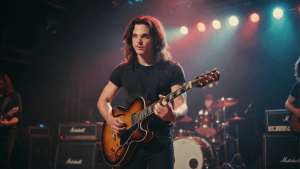
For most of Brian’s early career, he was learning the ropes as a studio nerd, but that doesn’t mean he didn’t get out and play when the opportunity arose. Working in the studio put him in direct contact with many great musicians, many of whom had projects of their own that were missing a man here and there, and Brian was the perfect shoo-in.
Brian’s first professional live performance came while he was a roadie for the Buffalo, NY, band Talas in 1977. One of Brian’s jobs as a roadie was to keep the guitars in tune and swap them out during performances. Invariably, the rest of the band caught wind that Brian had some guitar skills, and it was before one performance when guitarist and frontman Dave Constantino injured his hand that Brian was asked to step onstage to help with guitar duties. “I wasn’t afraid to be on stage; I was afraid of screwing up. I didn’t know their songs all the way through,” Brian reflects. Well, it was good enough because Brian became a frequent guest onstage after that.
In 1980, when Brian moved to NYC to attend Juilliard and begin his apprenticeship under Phil Ramone at A&R Recording, he was exposed to a whole new level of professional musicians. When they weren’t in the studio as session musicians, they were on the road backing many of the era’s legends or performing on Broadway, essentially selling their services to the highest bidder. It was Brian’s first exposure to the ‘hired gun’ mentality, and for quite some time after that, he thought it was the norm. While in school, Brian couldn’t just hop on tour like his contemporaries, but he did sit in with Cyndi Lauper, Diana Ross, and the band Tanzik whenever he could. He also did a lot of understudy work for a variety of Broadway musicals, since getting paid to rehearse was new to Brian. And of course, he had his weekday happy hour gig at Trude Heller’s, where he rehearsed for school.
After graduation, Brian applied the ‘hired gun’ mentality throughout much of the 80s. Even after moving to Nashville and later to Austin, he essentially just hopped in whenever there was a need and added stage time with, among others, J.J. Cale, Willie Nelson, and Tesla to his resume. Brian didn’t actually join a Band until he went on active duty and was stationed in Germany…

Brian discovered the band Rush while growing up in Buffalo, NY, in the late 1970s, and has been an avid fan ever since. In 1985, when Brian was still in the army. The rec center at Kelly Barracks was the ultimate hangout where soldiers could unwind and make some music. Brian had his heart set on playing guitar, and although the one on loan at the rec center was a bit battered and cheap, it got the job done. It was there that he first crossed paths with bassist Mike Lieberberg and drummer Ernst Theobald. Mike was an expatriate, busy building his 5-Star talent agency, which primarily served the military club scene in Germany. Ernst, a local German national with a Ph.D. in theoretical mathematics, was juggling his part-time gig at the base exchange (PX) while nurturing his robotics startup on the side.
During the stretches between Brian’s deployments, the three of them would come together to jam, focusing primarily on Rush songs they all loved. As they practiced, they gradually sharpened their skills, landing paid gigs at local rock clubs in Sachsenhausen, near Frankfurt, and at the Rainbow NCO Club in Darmstadt. They decided on the band name 2112 as a playful nod to the progressive rock band they idolized.
When Brian wrapped up his military service, he stayed in Germany, and he, Mike, and Ernst kept going for a while. The band never really dissolved or faded; it merely lingered in the space where the power trio had free time. Mike had shifted his focus almost entirely to his agency, while Ernst was deep into launching his robotics company. Ernst even brought Brian on board to head the lab once he transitioned to civilian life. Meanwhile, Mike had built a solid lineup of bands he could book for military gigs and began sending plenty of hired-gun work Brian’s way…

It’s the 1990s, and country music is all the rage in Europe. Mike Lieberberg’s 5-Star agency has been busy forging connections in the military circuit, particularly with the United Service Organizations (USO). After successfully bringing over a slew of big American acts, he decided it was time to expand his roster to include local talent that wouldn’t break the bank. He asked Brian to compile a list of qualified bands he could pitch for gigs, and he also encouraged Brian to start his own band so he could join in the fun.
That’s when Brian reached out to his fellow hired guns: guitarist Mickey ‘Lee’ Henke, bassist Tony Hardin, and drummer Udo Guckelsberger. Together, they formed the first version of the band, Bakersfield. At first, they mainly played country covers, with Brian and Tony sharing lead vocals—Tony often taking the lead on the classic tracks. But Brian was still a songwriting fool with a bunch of original songs he wanted to try out. During rehearsals, he would surprise the guys with one of them, and they’d work together to bring those tunes to life onstage.
Bakersfield quickly made a name for itself on the military circuit. Mickey’s skilled country pickin’, Brian’s southern-rock-inspired solos, and Tony’s distinctive, raspy vocals gave them a unique sound that resonated with audiences. However, it was Brian’s original songs—like “Made in the Shade,” “Practical Man,” and “Life on the Farm”—that left fans eager for more. These tracks were battle-tested before live crowds long before Brian even thought about putting them on a record, becoming true fan favorites in the process…

After the release of the Made in the Shade album, Brian’s old friend Mike and his 5-Star agency immediately hit Brian up to sign a deal to open for the upcoming Dwight Yoakam world tour he had brokered. But with guitarist Mickey in the wind and bassist Tony recently retired, all that was left was Udo, who didn’t want to go on tour, so there was no band. Bummed, Brian reached out to old friends Chrissy Leon and Keith Headley, and they, once again, came to the rescue, introducing fellow Brits Derek Smith on guitar and Rex Jones on drums.
Both Derek and Rex came to Germany in the 70s and began touring with big bands, jazz, and soul groups across the country. Although their style was not exactly country, neither was Brian’s, so the trio gelled well and began working on the ‘Bakersfield’ sound. But Brian still needed a bass player, and as luck would have it, one had just moved in next door…
Bassist Randy DeBeers’ wife was a staff sergeant at Rhein Main Air Force Base and, as such, qualified for off-base housing. When an apartment in the building next to Brian’s opened up, they immediately jumped on it. Coming home from work one day, Brian saw the military moving truck and figured he ought to go out and welcome his new neighbors. After a few laughs and a couple of beers, it turned out that Randy had played bass in a band in his hometown and kinda missed performing. Seizing the opportunity, Brian ran home, grabbed his acoustic, and they began jamming in the backyard to the delight of their neighbors, who eventually brought more beer and food. And Viola! They had a full-on barbecue party!
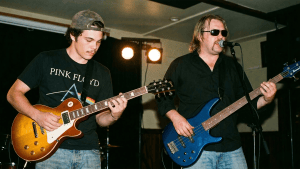
Brian had met singer Rob Hawkins while playing with the Nightstalkers at the Rainbow NCO Club in Darmstadt. Rob had a solo act that was doing pretty well, and when he heard Brian was available, he asked if Brian wanted to team up and form a duo like Brooks and Dunn. Yeah, no. Brian, still under contract with the 5-Star agency, needed a band, so he brought Udo Guckelsberger back on drums and asked his old friend, bassist Bob Barnett, if he wanted to join.
Brian had met Bob Barnett through Chrissy Leon and Dave Bell many years earlier. Bob, a civil service employee of the Army based in Mainz, Germany, was building a home studio. He and Brian often got together to work out technical details and record. Bob also performed frequently with fellow American fiddler Helt Oncale, who had his own gig and often sat in with the top German country bands of the time. Brian now had a band of top players who couldn’t or wouldn’t fully commit to the project because of other obligations, and he wasn’t about to risk the Bakersfield brand. So he came up with a new band name, Weekend Moon, after the hit single he had released just a few months earlier.
Initially, things went well; the group was tight and professional, quickly earning the 5-Star agency’s favor. But eventually, Rob felt overshadowed as he tried to keep up with more experienced performers, and he left after only a few months. After that, Bob’s prior commitments began to interfere, and Brian was forced to use hired guns. That put the burden of managing the band and performing entirely on Brian’s shoulders, so he was glad to let the band die out when another opportunity arose…
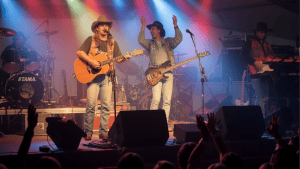
The fall of the Berlin Wall in 1991 marked a significant turning point in both Germany’s political landscape and its cultural scene. From the remnants of the failed German communist state in the eastern province of Thüringen, the band Westend emerged and started making a name for itself in the country music scene.
Brian ran into Andy Schingnitz, lead singer of Westend, at one of the many Trucker Festivals they both played when Bakersfield was still tearing it up. It turned out that Brian’s wife had family from Erfurt, the same city as Westend, so it was no surprise they hit it off. Quickly becoming friends, Brian and Andy would cameo at each other’s gigs, goofing around and acting out improv skits to the delight of fans. When Bakersfield hit the skids, the national press began suggesting that Brian would join Westend, so one day, as if ordained, Andy asked Brian if he’d like to join, and Brian, not one to disappoint, accepted.
Brian stepped in as the second lead guitarist alongside guitarist Dieter Knoblauch, bringing in lap steel guitar, fiddle, and keyboards as needed. This gave the band a fresh vibe, with tight five-part harmonies and a broader setlist. As a result, Westend rose to the top of the European country music scene and was busier than ever…

In 2000, Brian and his oldest son, Christopher, flew in from Germany first to get things organized (cars, house, furniture, etc.) before Brian’s wife and youngest son, Patrick, flew over. While staying with his family in Bakersfield and using that as a starting point to mount the hunt for new digs, Brian’s old friend, guitarist Jeff DeHollander, whom he met during Dwight Yoakam’s first USO tour, caught wind that Brian was in town and hit him up to step in for him at the Chrystal Palace while he went on tour for six weeks.
Brian didn’t realize it at the time, and just so you know, Buck Owens’ Crystal Palace in Bakersfield, California, was a legendary country music venue, restaurant, and museum that closed in 2025. It’s the place where the ‘Bakersfield’ sound—named after the city, not Brian’s previous band—began, and it’s essentially a shrine to Buck Owens and all his famous friends. As far as Brian knew, he took a six-week gig just to make a paycheck as a hired gun…
Brian wasn’t given a setlist, so as usual, he showed up at the Chrystal Palace expecting to just play solo guitar to a bunch of standards. He was early, so he set up his gear, ordered a beer, and waited. Bassist Mike Gomez arrived next and started setting up his gear, looking around quizzically at the unfamiliar setup. Brian went over to help him out by introducing himself. Mike smiled ear-to-ear, rummaged through his bag for his book of songs, unceremoniously planted it on a music stand in front of Brian’s gear, and said, “This is what we’re doing tonight.” Brian said, “Cool,” and went back to his drink…

Camarillo is a charming, family-friendly city in Ventura County, California, known for its Mediterranean climate, agricultural roots, and scenic mountain views. Just an hour away from his new offices at Quantum Digital in Santa Monica and Capitol Studios in Hollywood via the scenic Pacific Coast Highway, it was the perfect place for Brian and his family to settle, far enough from the chaos of LA.
Once settled, Brian reached out to his agent to get a sense of the lay of the land, and she immediately suggested he go on tour. Brian had no idea how to set up a tour, so he contacted the only person he knew who did—Mike Lieberberg. However, Mike was in Germany and had no desire to fly over and manage things, so he coached Brian through it, including getting the record company to fund the project in exchange for a new album, finding people to transport and set up the sound system, hiring security to manage the events, and so on. All Brian really had to do on his own was find the musicians.
Through his ties at Capitol, Brian found some worthwhile bands to sit in with. You know, professional-grade acts that weren’t so busy as to interfere with Brian’s family life. There was a Richie Valens revival band and an arena rock cover band that he played with regularly at the Whisky a Go Go on the Sunset Strip. Through these groups, Brian met Marvin Huntsman, Rusty Simms, and Nadundo Abasi. Torrey Gerardo and Tiffany Janis were the girlfriends of Marvin and Rusty and were professional backing singers who had toured with the likes of Huey Lewis and the News, Joe Cocker, and Diana Ross. Brian had a band!

After wrapping up the 2001 tour, Brian was tired of performing the same old, worn-out tunes, even if they were his, and he decided to take a break and enjoy some family life. But after a few years, Brian felt a bit restless again and began looking for new projects, so he reached out to his friend, bassist Jose Martinez. They had previously teamed up at Capitol Studios, and Jose’s current gig was with a Santana tribute band called Savor. However, the band’s guitarist wasn’t quite capturing Santana’s signature style, and Jose thought of Brian for the role.
When Brian showed up for the audition, he didn’t just mimic Tito Santana’s guitar playing—he embraced the legendary musician’s stage presence and mannerisms. This authenticity blew everyone in the band away, and they offered him the job as lead guitarist on the spot. Excitement buzzed in the air as they kicked off their Southern California tour.
Over 22 shows with Savor, Brian delivered stellar performances. The tour culminated in a major televised event that both KTLA and the Los Angeles Times hailed as “electrifying” and full of “double-take moments.” The music was on point, and the band’s chemistry was electric, but as the tour progressed, tensions began to bubble among certain band members. Not wanting to get caught up in any drama, Brian decided it was time to step back and look for new opportunities once the tour wrapped up…
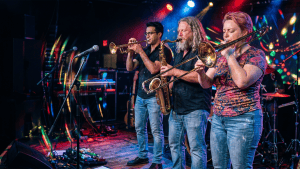
The Toad Tavern was a charming nightclub just a stone’s throw from Brian’s home, featuring a mix of local talent and national acts, creating an electric atmosphere for music lovers. Tavern owner Brice Hancock and keyboardist Marty Wallace were old college buddies. When Brice wanted a house band to support national solo acts he was eager to showcase, he asked Marty to put the band together. That’s when Marty stumbled upon Brian’s ad in the newspaper. Intrigued by Brian’s impressive background, he reached out to invite him to audition.
When Marty called, he said he was only looking for a lead guitarist, so when Brian arrived for the audition, he brought only his guitar and amp. Brian figured that if there was any interest in his other musical abilities, it would come up during the audition and could just sweeten the deal. He needn’t have worried; Marty was blown away by Brian’s guitar prowess, singing ability, and his ability to learn songs quickly, so he hired him on the spot.
Marty’s daytime job was as an educator at the University of Colorado, where he taught music theory, putting him in a prime position to headhunt aspiring talent. After bringing Brian aboard, he often invited students to sit in on rehearsals, during which he and Brian would take turns teaching. The most talented students joined the band, including Ron Ohren on bass and Percival Johnston on drums. But when needed, Marty, who also played saxophone, wanted a full brass section, so he brought Hiram Bartel on trumpet and Sinead Marks on trombone to complete the lineup…
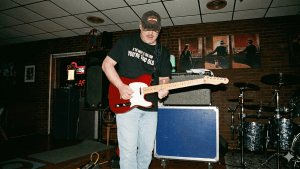
Marty wasn’t the only one who reached out about Brian’s ad. Will Young was in a tight spot because his classic rock cover band was without a guitarist for an upcoming gig. Intrigued by Brian’s ad, he called and invited Brian to sit in on one of their rehearsals. As with Marty, Will was blown away by Brian’s guitar skills and his impressive ability to sing just about anything you could throw at him.
Will struggled to find other members to join his band. Sure, he could find stand-ins for gigs, but beyond that, nobody really wanted to commit, or they had their own thing going on. So it boiled down to the core members: Will, Brian, and bassist Ken Martinez. The evolution occurred during a rehearsal, when the trio had just finished playing ZZ Top’s “La Grange.” An excited Ken blurted out, “Way to go, GeeDub,” after Brian nailed the vocals and guitar. GeeDub was a play on Brian’s full name, but in a ZZ-Top cool kind of way. Going along with the gag, Brian began calling Ken ‘Rev’ for his penchant for wearing black button-down shirts over white T-shirts, and Will ‘BigDub,’ well, because he was exactly the opposite. Will was the shortest guy in the band.
With a sense of humor and a newfound identity, the power trio decided to run with it. By then, Brian had converted his basement into a professional-grade home studio so he could continue his regular production work for Capitol Records. He dragged Will and Ken in to record a demo they could shop around for gigs. The demo was as lighthearted and self-deprecating as the boys themselves, and they began booking gigs around the Denver area. At first, it was just beer joints like the Open Tap and Ziggies Saloon; within a short time, it was outdoor festivals and more established venues like Oskar Blues and Little Bear. But when the offer to tour with the Black Crowes came in, it was time for a come-to-Jesus moment…

But wait! There’s more! Local yodeler Eric Johnson (not to be confused with the guitar empresario from the 80s) toured northern Colorado and Nebraska with his country cover band and was in desperate need of a decent country picker. He, too, saw Brian’s ad, but unlike the other guys, there was no audition or rehearsal. After the initial call, Brian was unceremoniously emailed a setlist and a list of dates he was expected to perform on.
In the Eric Johnson Band, Brian was just another hired gun. A pretty regular one, but no one who played for Eric was a ‘regular’ member. The band was more like a revolving door, with Eric often scrambling to find anyone who would answer his call before a gig. The band mainly performed country covers that were standard for the time, but when Eric wanted to do a new song, he’d turn to Brian to learn it so Brian could, in turn, teach it to the rest of the band at their next performance. There were no rehearsals, so the band sounded as thrown together as it was. Brian eventually grew fed up with the chaos, stopped answering Eric’s calls, and Eric faded into the background. Looking back, Brian reflects that the only good thing to come of his time with the Eric Johnson Band was the chance to meet other hired guns like himself.
After Eric, Brian continued to sit in with local country bands whenever he got the itch, performing across Colorado and neighboring states. He had regular gigs with Chris Lawson, Chris LeDoux, and Walker Williams, and he even shared the stage with Idaho native Pinto Bennett and Texan Cody Canada, who was fronting Cross Canadian Ragweed at the time. Brian was a staple at the Greely Stampede in Colorado, The Million Dollar Cowboy in Jackson, Wyoming, and The Cheyanne Frontier Days, also in Wyoming, where he opened for everyone from Brooks & Dunn to Phil Vasser. He also made quite a few new friendships with fellow musicians, including drummer Kelly Ireland, bassist Isaac Perry, and the up-and-coming Chris Tracy…
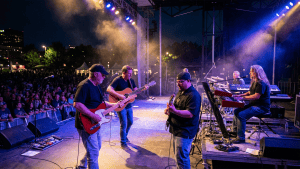
Brian first met Chris Tracy while sitting in with Walker Williams at the Greely Stampede in northern Colorado. Tracy was primarily a vocalist, and Brian didn’t know how the kid muscled in on Walker’s action, but he was really impressive! And ambitious to boot!
Chris cornered Brian as he was packing his gear into his truck after the show. When the conversation turned to music production, Chris’ eyes lit up. Chris had a bunch of unfinished songs he wanted to record and lobbied Brian hard to help produce his album. But for Brian, that was a bridge too far this early in the relationship. Instead, he talked the kid into settling on a 3-song demo he could use to book gigs. With that, the two exchanged numbers, and Brian headed home.
Chris was on it. Within a week, he was in Brian’s studio recording vocals. To keep costs down, Brian played all the instruments and produced the 3-song demo in about 3 days. It wasn’t Brian’s best work, but it was a hell of a lot better than demos he’d heard from other artists and good enough to shop around Nashville if the kid was so inclined. Chris was ecstatic and told Brian he’d keep him posted…

Brian was increasingly getting serious work from Capitol Records; he had just wrapped the soundtrack for the American Revolutions: Southern Rock documentary and had 3 other projects waiting in the queue. Brian needed professional representation, so he signed with K&P Enterprises in early 2009. During his intake interview, he was asked what he wanted to do with his solo career.
Yeah, about that. At the time, country music, with its rap elements and over-engineered sound, wasn’t anything Brian could identify with anymore. Brian had just made a cameo appearance at the Crossroads Music Festival with his old friend Albert Lee and had opened for the Black Crowes at the Red Rocks Amphitheater. It seemed like blues-rock and crossover-rock were in resurgence, and with the recent success of his song “What the Hell” and constant nudging from his friends, Brian began seriously considering reinventing himself as a blues-rock artist.
The decision was pretty much made for him when the offer to open for Robert Randolph & the Family Band fell into his lap. Coincidentally, the Toad House band was in trouble, too. With the economy going belly up, the Rhythm & Blues scene took a big hit, and many artists retired or opted not to tour. As a result, Toad Tavern owner Brice Hancock began hiring cheap local talent to fill the roster, and the Toad House band was forced to look elsewhere for work…

With the legion humming like a well-oiled machine and feeling a bit healthier because of it, Brian had a bit of free time and thought he might hit the stage again. Nothing crazy, just a gig here and there. So he hit the classifieds and found an ad for a band looking for a second guitarist and singer that sounded interesting. He called and reached drummer Herschel Burden III, who promptly invited Brian to audition. It wasn’t much of an audition, per se. Brian connected instantly with the other guys, both personally and musically, and they were willing to work around his limitations. So Brian started right then and there as the band’s new keyboardist/guitarist. Now, all they needed was a band name…
What happens when you put a group of middle-aged, politically incorrect, half-rednecks in a room to conspire about anything? You get Cracker-41. Brian, drummer Herschel, guitarist Gary Stanczik, and bassist Dennis Cory came up with the name, which drew on the derogatory Southern term for a white man, ‘Cracker,’ and on Highway 41, the Tamiami Trail, the main route to just about anywhere along Florida’s west coast. “Sure, we had better band names, but Cracker-41 made everybody snicker, so we kept it,” Brian recalls.
What made Cracker-41 unique was that everyone in the band had years of professional experience and sang, giving them a huge repertoire of songs to choose from and creating some really cool vocal harmonies. They were ready to hit the ground running, so using his connections with the American Legion, Brian booked gigs at Wounded Warrior Project and Legion events, which gave them the exposure needed to land jobs at biker festivals, outdoor ‘Swamper’ fests, and even highfalutin country clubs. Within a few short months, they went from weekend warriors to headliners and were busy touring the Florida coast. Unfortunately, too busy for Brian…
We use cookies to improve your experience on our site. By using our site, you consent to cookies.
Manage your cookie preferences below:
Essential cookies enable basic functions and are necessary for the proper function of the website.
These cookies are needed for adding comments on this website.
Google reCAPTCHA helps protect websites from spam and abuse by verifying user interactions through challenges.
Statistics cookies collect information anonymously. This information helps us understand how visitors use our website.
Google Analytics is a powerful tool that tracks and analyzes website traffic for informed marketing decisions.
Service URL: policies.google.com (opens in a new window)
SourceBuster is used by WooCommerce for order attribution based on user source.
You can find more information in our Cookie Policy and .