
From the moment Brian walked into the group home, his counselor, Alex—who had seen it all serving in both the Korean and Vietnam wars—was eager to guide him toward a military career. But Brian wasn’t exactly thrilled at the idea of being sent off to some remote location like “Bumfuck, Egypt.” After giving it some thought, he decided to chat with an Army recruiter. As luck would have it, the New York State National Guard had a sweet deal going on: a sign-up bonus for Combat Engineers, along with a deferred active-duty option. This meant Brian could ease into military life, finish up school, and stay flexible about where life might take him next.
Brian completed his one-station unit training (OSUT) at Fort Leonard Wood, Missouri—a.k.a. “Fort Lost-In-The-Woods, Misery” as a combat engineer (12B10), specializing in explosives and bridge building. He fondly remembers, “Our drill sergeants were running fools. To celebrate graduation, they took us on a 7-mile victory run in our class A’s through the female barracks, belting out some really nasty cadences. Most were good sports, but the looks they shot us were frigging priceless!” he laughs.
Following OSUT, Brian headed to Fort Campbell, Kentucky, for air assault training, where he learned the art of rappelling out of a perfectly good helicopter. Then it was off to Fort Bragg, North Carolina, for airborne training, where he tackled the art of jumping out of a perfectly good airplane. After all that gravity-defiance training, he returned to Fort Leonard Wood as a buck sergeant to join the Cadre program, taking on the role of a trainer for the next cycle of OSUT.
After 20 weeks of non-stop training, an exhausted Brian made his way back to Buffalo to begin his hitch with the 152nd Brigade Engineer Battalion. Shortly afterward, after acing his Juilliard audition and starting his apprenticeship at A&R Recording, he transferred to the Manhattan Armory in NYC.
In December 1982, Brian got the call to go to the Joint Security Area (JSA) in Panmunjom, South Korea, as part of the United Nations Command (UNC). He was there for advanced training focused on maintaining the armistice and patrolling the demilitarized zone. Which is fancy military speak for 14 days of endless duty in the guard towers and occasionally taking a .50 cal. to any mines the KPAs (Korean People’s Army) laid down in the demilitarized zone the night before. Fun stuff!
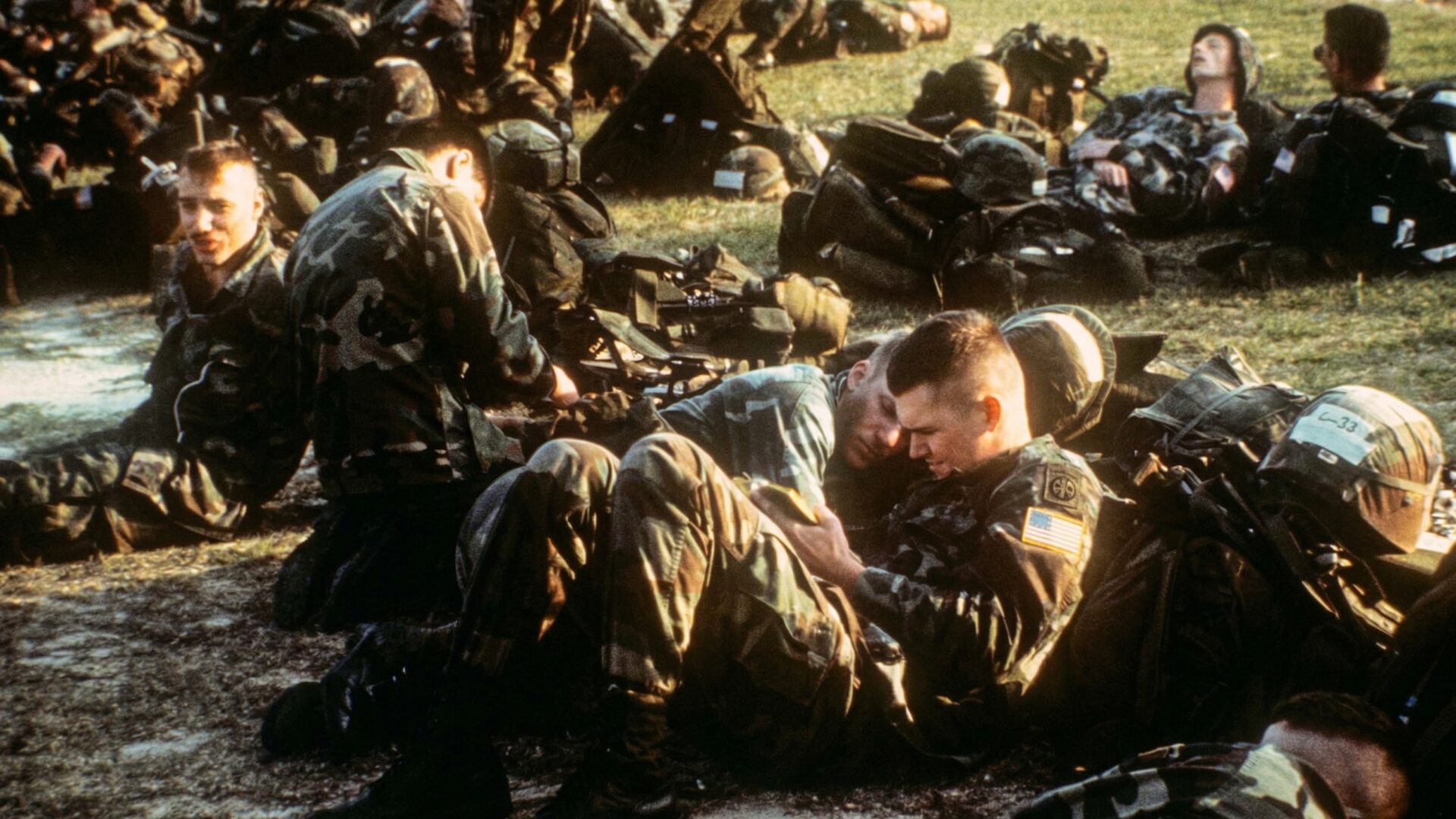
When Brian landed the gig as a staff writer at Capitol Records in 1983, he was also granted transfer orders to the 1st Battalion, 100th Regiment, as a reservist in Nashville, Tennessee. He had barely unpacked when he received orders to report to the 82nd Airborne Division headquarters in North Carolina for deployment to Grenada as part of Operation Urgent Fury.
Once he arrived on station, Brian was told by his commander that his combat engineering skills made him a perfect fit for the advanced team tasked with a low-altitude assault on Point Salines Airport on the island’s southern coast. To make things even more intense, he was part of the first wave, supporting the 75th Ranger Battalion. Unfortunately, the intel was shaky, and the timing was off. By the time Brian hit the ground, the Rangers had barely pushed into the airport.
“The second we hit the ground, we were slammed with heavy fire,” Brian recalls. “We had to dive into the Palmettos for cover until the Rangers gave us the green light to move up.” For the next three days, Brian and his team focused on providing explosives support to the Rangers as they navigated the conflict zone. After that, they were assigned to the infrastructure support division, rebuilding roads and runways. In total, Brian spent 14 days on the ground in Grenada.
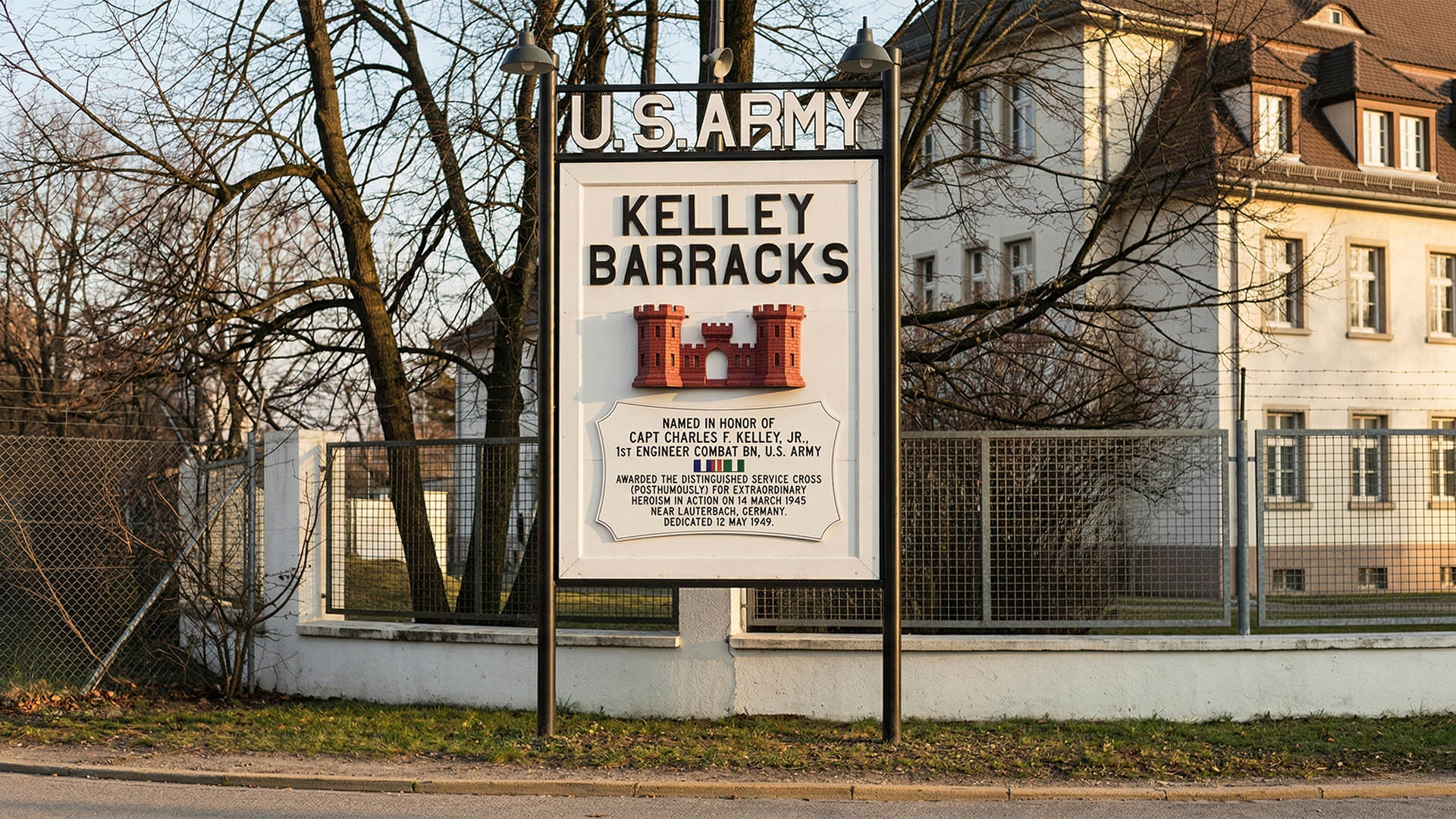
Brian moved to Austin, Texas, in late 1984, shortly after he was granted a duty-station transfer to the 980th Engineer Battalion, but the recent economic downturn had not yet rebounded in Austin, and after only a few short months, Brian regretfully opted to go active duty and headed for Germany to serve with the 547th Engineer Battalion, Company C, at Kelly Barracks in Darmstadt.
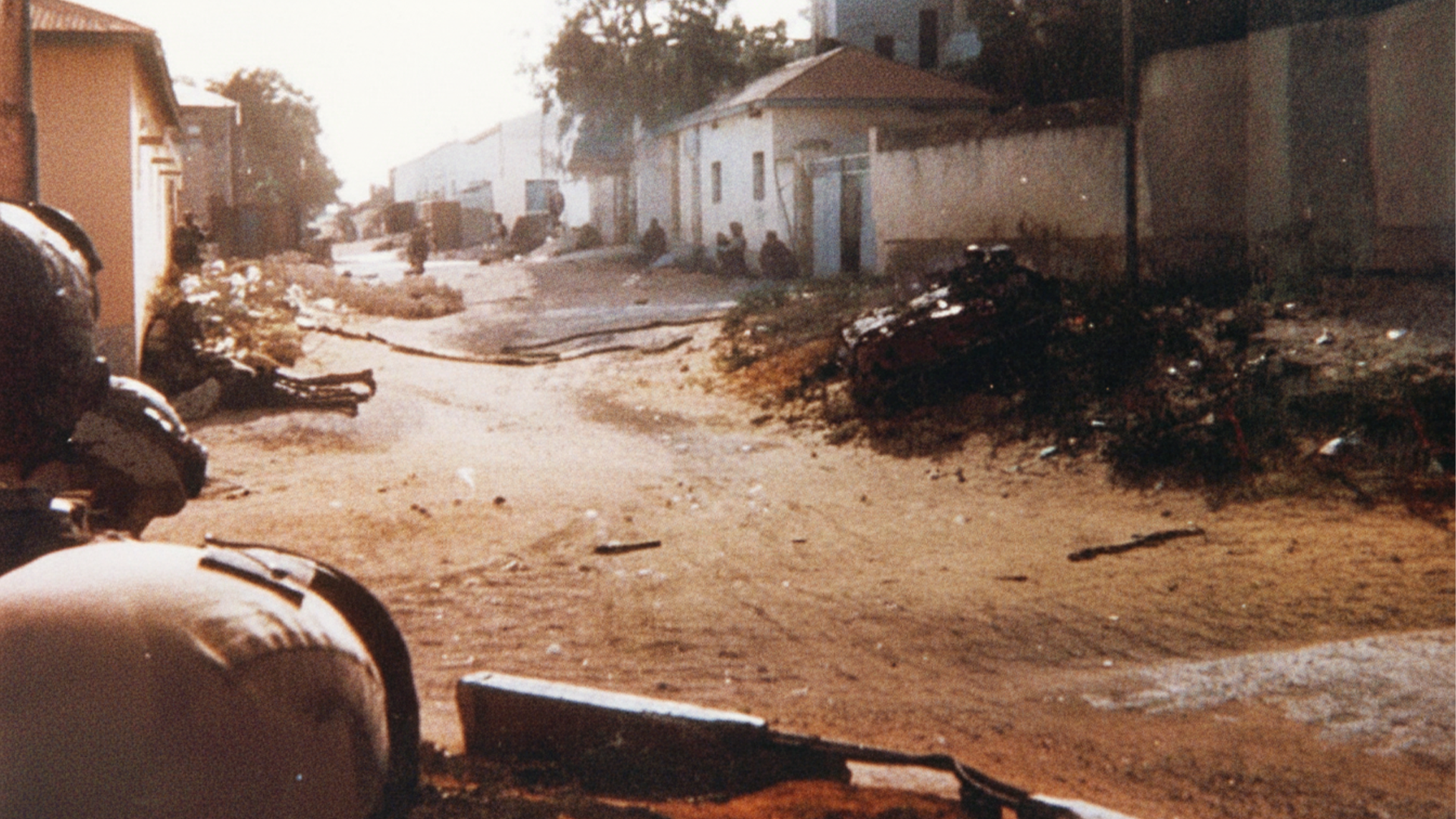
In 1985, soldiers lived like kings in Germany. With the exchange rate at a solid 5 Deutsche Marks (DM) to the dollar, Brian finally had some extra cash to enjoy life. But back home, bills were still looming, so when he got the chance to join the UN peacekeeping force in Mogadishu, Somalia, he was all in—especially for that sweet hazard pay.
Shortly into his tour, during a routine rappelling exercise, the rigger in the helicopter got bound up, and Brian’s line snapped, sending him falling about 20 feet to land precociously atop a parked vehicle, and he ended up with a broken pelvis and severe knee injuries. The medics on site did their best to patch him up, but it was clear he needed major reconstructive surgery. So, it was back to Germany on a C-130 for some much-needed treatment.
Brian spent over a month at the Army hospital in Frankfurt, Germany, focusing on his treatment and rehab. While the fractures in his pelvis were serious, they were just part of the story. Almost every ligament in both of his knees was either torn or badly damaged, and although reconstructive surgery helped, it had its limits. His doctors remained hopeful but cautioned him that he might not regain full mobility in his legs, and he was offered a medical discharge with full honors. Despite the challenges ahead, Brian politely declined and bravely walked away from the hospital on his own, proudly wearing his combat boots.
Limited to light duty and coming to terms with the fact that he might never be allowed to rappel or jump out of an aircraft again, Brian decided it was time for a change. With an opportunity to cross-train in his unit, he chose to become a Heavy Vehicle Operator (64C20), planning to spend the rest of his tour hanging out in the motor pool. At least, that’s what he thought…
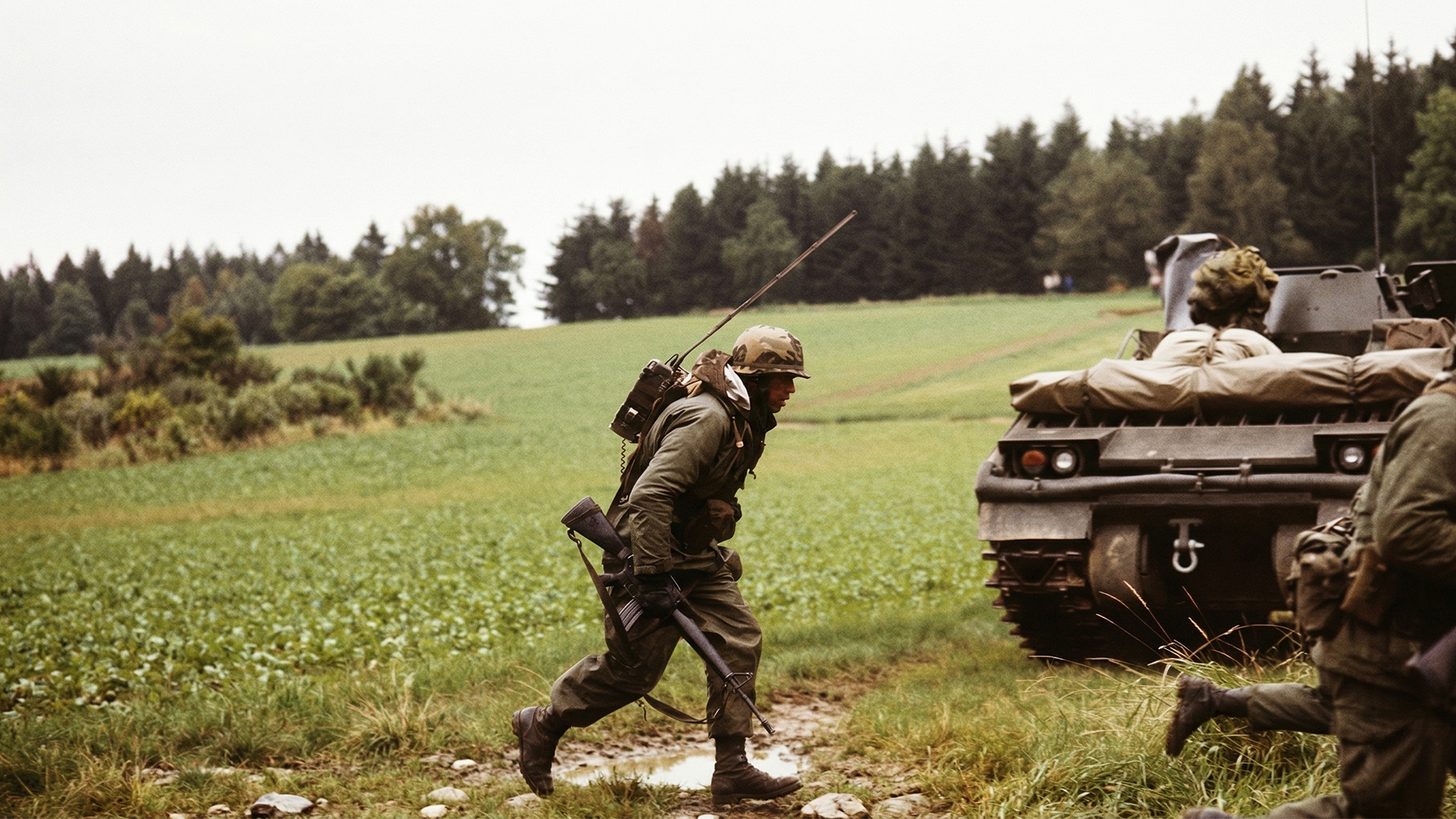
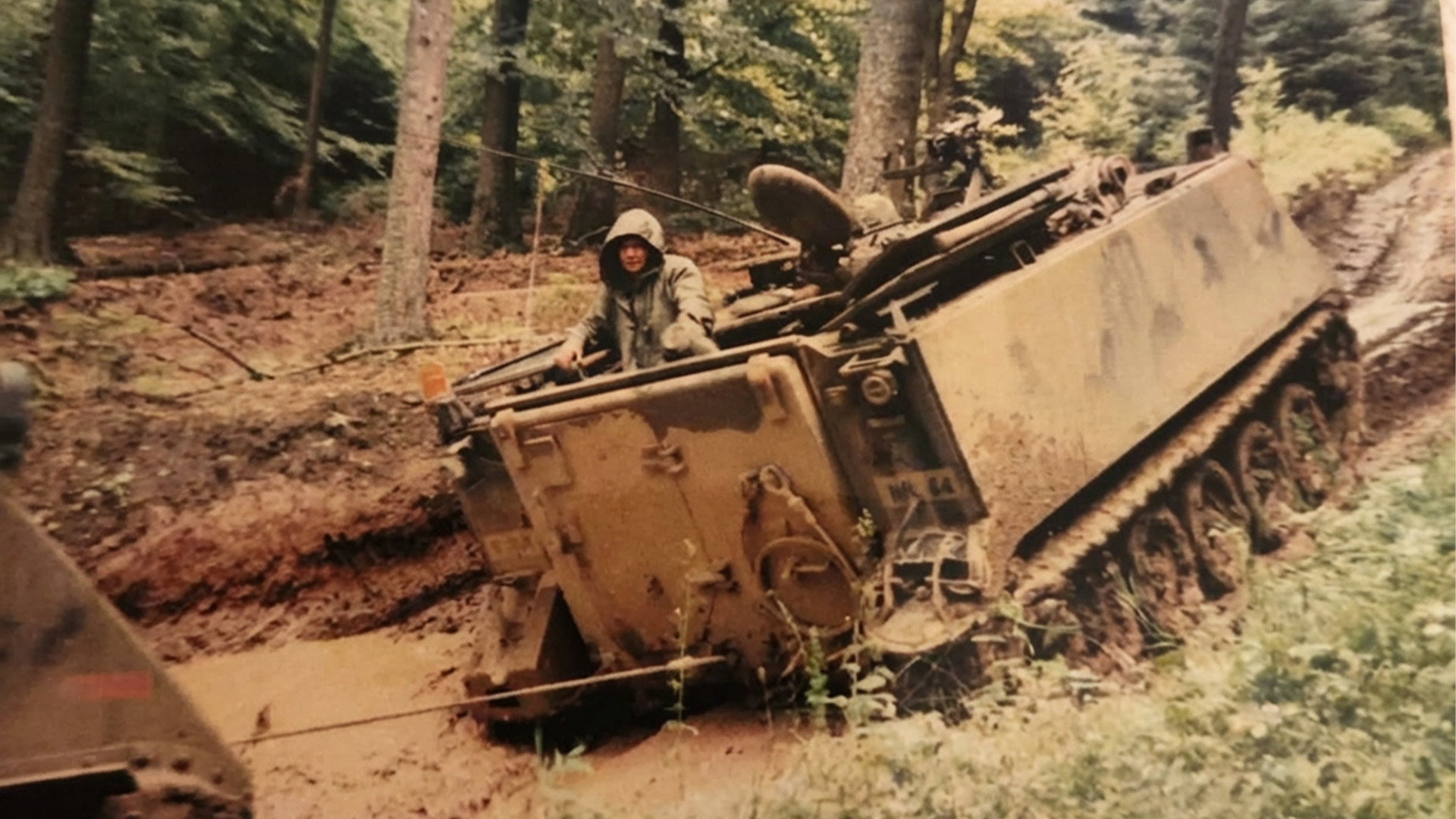
Exercise Reforger (Return of Forces to Germany) was a crucial NATO military exercise conducted from 1969 to 1993 during the Cold War. The primary goal of this annual exercise was to ensure that NATO forces could quickly mobilize and deploy to West Germany in case of a conflict with the Warsaw Pact. It wasn’t just about U.S. troops; many soldiers from other NATO countries, including Belgium, Canada, France, the Netherlands, and the UK, also participated. This joint effort helped enhance military readiness and cooperation among the allies during a tense period in history. – Wikipedia
In preparation for Reforger 85 (Central Guardian), Brian’s company was assigned to the 3rd Armored Division as part of the Orange task force to conduct assault training operations. Brian thought he’d just spend his time doing guard duty, but his Special Forces First Sergeant Frank McKnight had other ideas…
Now a squad leader, Brian had rebounded quite nicely from his injuries only a few short months before and was issued an AN/PRC-77 radio in an Alice Pack, a.k.a. “Prick 77,” which he carried during reconnaissance patrols. Everybody had to do night patrols, and tonight, of all nights, he had his gung-ho first sergeant tagging along with his team.
In the early hours, around 02:00, Brian was on patrol when he got an unexpected call from CentComm. They had orders for him and his squad: intercept and harass an enemy camp just outside hostile territory. Without a second thought, Sergeant McKnight volunteered Brian’s six-man team for the task.
When they arrived at the target area, they were taken aback by what they saw—a full company of enemy soldiers, far more than they could handle. They couldn’t call for backup; the mission was covert, and radio silence was key. So, McKnight decided they needed to recon the area first and assess their options.
When the squad returned, they reported back with intel on enemy positions. McKnight discovered that the enemy headquarters tent was dangerously close to the edge of the camp, making it a prime target for a surprise assault. McKnight, always eager for a challenge, saw an opportunity to take out the command center, and he laid out a plan for their tiny squad.
With their packs stashed and geared for light assault, the seven-man team stealthily navigated around guard posts and slipped into the company headquarters tent. They caught everyone, including the enemy commander, completely off guard—he was still snoozing away! Within seconds, they had assault rifles aimed at the faces of the commander and his staff, effectively neutralizing the threat.
Now it was time to break radio silence. Brian handed the handset to his first sergeant, relieved that he wouldn’t have to report on what was technically an unsanctioned operation. CentComm then reached out to the enemy companies’ next-in-command, a young butter-bar lieutenant who was just waking up, to verify what had happened.
When news of the successful (albeit unauthorized) operation reached CentComm, it quickly grabbed the attention of NATO leadership. Impressed by the squad’s skill and quick thinking, NATO Commander General Bernard W. Rogers made a personal visit to the team in the field to present them with the Army Superior Unit Award.
It was the final days of Reforger. Brian and his squad had been relieved of any further patrol duties thanks to the successful assault and were walking to the mess tent for breakfast when Brian’s legs gave out from under him, and he couldn’t get back up. Medics immediately attended to him, and he was flown back to Frankfurt for further evaluation. It turns out Brian had reinjured the nerves in his legs with all the running around he had been doing, and he needed additional surgery to fix the problem.
The Superior Unit Award was established in 1985 and is a decoration of the United States Army that is awarded in peacetime to any unit of the Army that displays outstanding meritorious performance of a difficult and challenging mission carried out under extraordinary circumstances. – Wikipedia

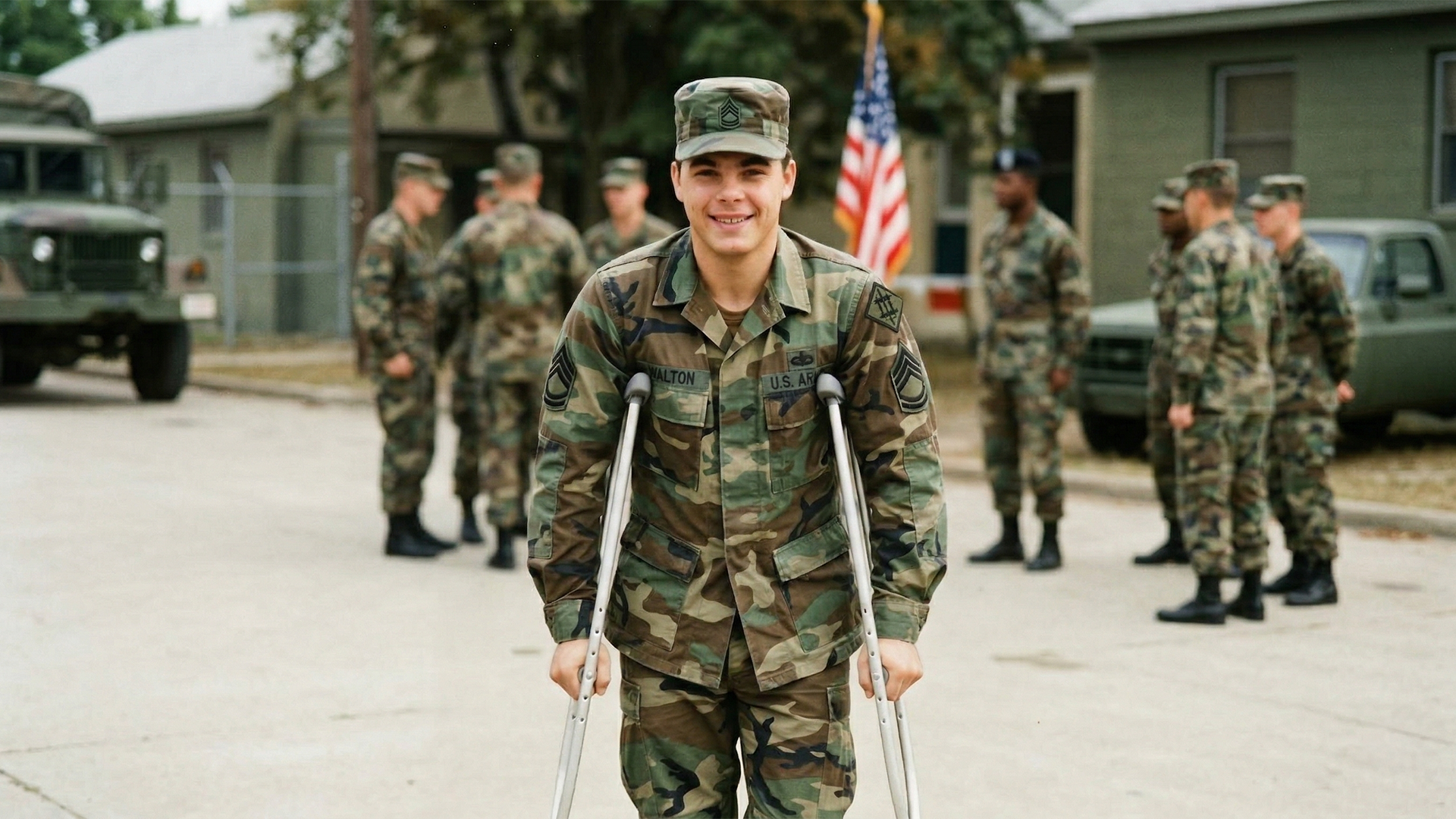
A few weeks later, on crutches, assigned to light duty, and freshly chastised by his doctors, Brian returned to the motorpool to waste time doing mindless paperwork when he found out that his biological father had just died of cancer. Brian had been offered a medical discharge with full honors when he first got hurt. Now, burdened with managing his father’s estate and facing the possibility of spending the rest of his military career stuck behind a desk, he decided to accept the offer and left active duty in late 1985.
Since then, Brian has been an active member of the American Legion, the Disabled American Veterans (DAV), and the Veterans of Foreign Wars (VFW). He now works at the Department of Veterans Affairs, advocating for veterans’ rights and helping disabled veterans access the care they need.