
Brian’s time at Capitol Records kicked off with a bang, and let’s just say, it was a whirlwind from day one. The Nashville office had just undergone a massive reorganization, leaving many critical roles unfilled. So, when Brian stepped into the office for the first time, he was met with a nearly empty space—save for his new boss, Rob Stringer.
Brian was hired as the new staff composer, tasked with crafting songs and scores for the upcoming projects. However, Rob had a different game plan. On loan from CBS Records, he was temporarily managing the Nashville office while they searched for a permanent replacement. Coming from NYC, Rob was already familiar with Brian’s background at A&R Recording, and he needed Brian’s production expertise. As a result, Brian found himself juggling a lot more than just composing—he was also attending meetings, coordinating schedules, reporting to Rob, and even supervising recording sessions.
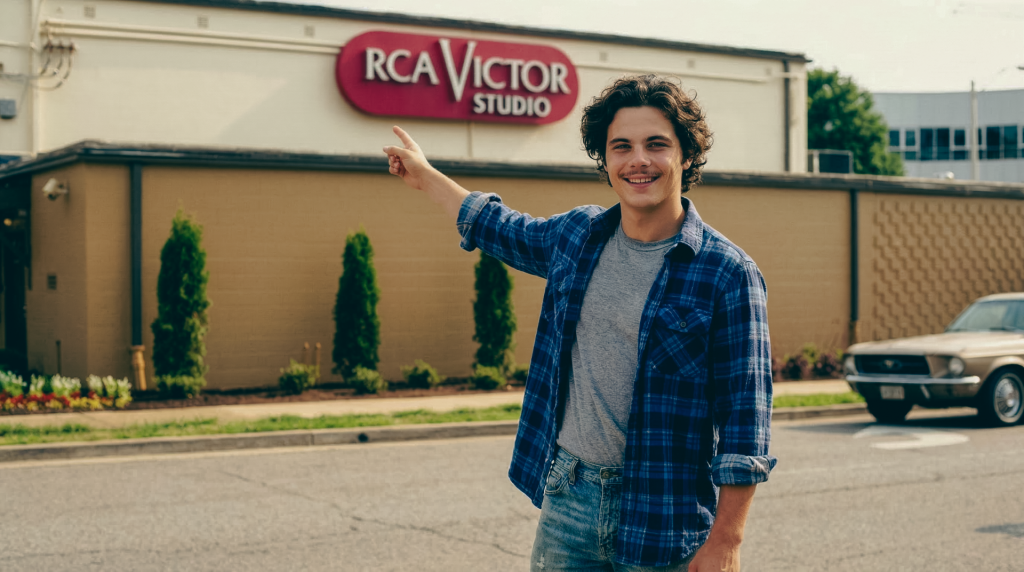
The Capitol Records Nashville office was conveniently located just a stone’s throw from the legendary RCA Victor Studio on Music Row, where Brian spent a considerable amount of time. To make life even easier, he snagged a cozy studio apartment just down the block on 16th Street. Music Row is a historic section southwest of downtown and is the heartbeat of Nashville’s entertainment scene. For Brian, it meant everything he needed was within easy walking distance.
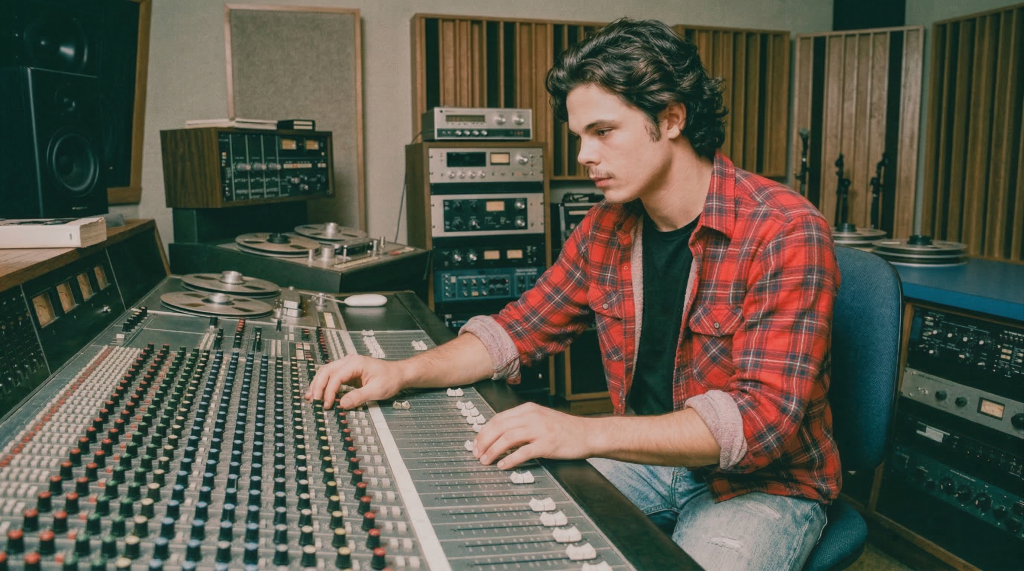
Brian’s first gig at Capitol was handling the post-production for the upcoming comedy film, Teachers, set to hit theaters the following year. As soon as he got his hands on the tapes, it became clear why the project had spiraled out of control and was so far over budget.
During his time working on the Arthur movie, Brian had sharpened his tape-splicing skills. This meticulous process involves duplicating the master tape, cutting the copy into various sections, and then carefully piecing everything together to create a smooth flow that matches the intended scenes. If it’s done poorly, it can sound like complete chaos—and unfortunately, that was pretty much what he was dealing with.
Aaron Russo, the producer of Teachers, was less than thrilled when Brian broke the news that nearly all the previous team’s work was unusable. With some reluctance, Aaron agreed to let Brian start fresh. So, with a clear vision and focused determination, Brian rolled up his sleeves and got to work.
Some of the most popular acts of the time, from 38 Special to ZZ Top, were featured on the soundtrack, and creating a promotional album featuring these artists was pretty standard back in the day. Since Brian had control of the masters for the soundtrack, it made sense for him to take the lead on the album as well, although he couldn’t help but think, “FML.”
Fortunately, Susan Gibson had recently come on board as the music supervisor, allowing Brian to focus on post-production work. Given that the music recordings came from various studios and producers, it was a bit of a challenge. Not everyone followed the same standards, so Brian had his work cut out for him to produce a cohesive master for the album. This process took him about four days, after which he shifted his focus to the soundtrack itself, which ultimately took him a couple of weeks to wrap up.
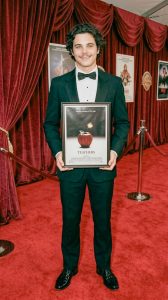
Teachers hit theaters in October 1984. While it didn’t become the box office hit everyone hoped for, the promotional album enjoyed a bit more success, thanks largely to the star-studded lineup. Several tracks even climbed onto the Billboard Top 100. Brian also received his first professional award, a citation from the Audio Engineering Society (AES), for his contributions to the project, thanks to nominations from his boss, Rob Stringer, and producer Aaron Russo. Despite these wins, the Teachers project couldn’t quite match the success Brian had with Arthur, and he was glad to move on.
After Teachers, Brian settled into a steady rhythm of composing and producing singles for well-known artists like Anne Murray, Diana Ross, and Mel McDaniel. Although it was rewarding work, it wasn’t enough to fill his day, so Brian teamed up with musicians Eddie Bayers on drums, Sonny Garrish on guitar, and Jack Williams on bass to make use of any leftover studio time by helping emerging artists create demos, including for Sylvia, Louise Mandrell, and Terri Gibbs.
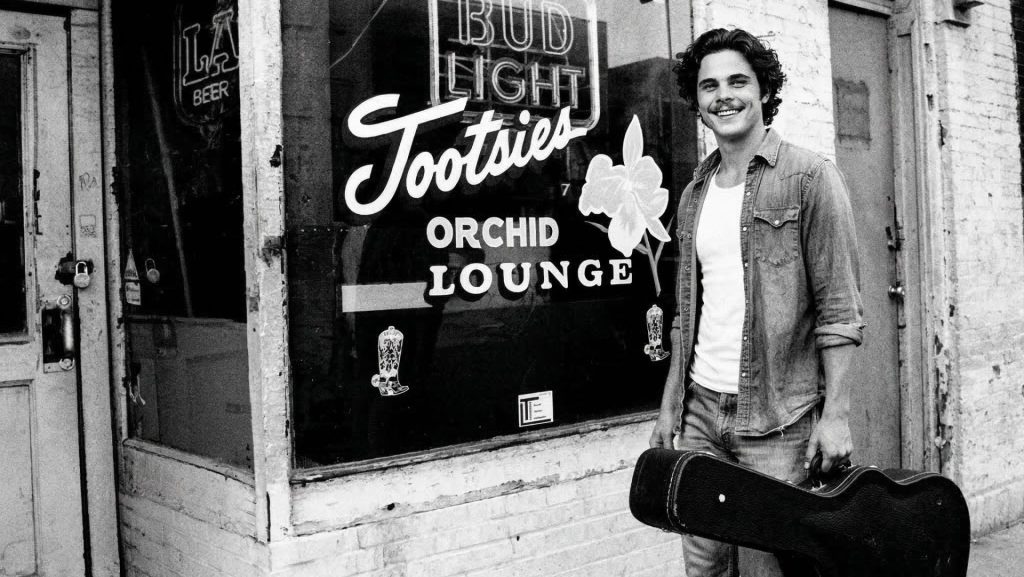
Nashville was buzzing with a massive Rock boom, and the scene was electric with clubs like Cantrell’s, Springwater Lounge, and The Cannery. It didn’t take long for Brian to jump right in. Thanks to some introductions from folks in the office, Brian was rocking it out almost every weekend with a local cover band. But Nashville is the Country Music Mecca, which meant Brian often got called to jam with legends like Willie Nelson, Waylon Jennings, and Merl Haggard at places like Tootsies, The Stockyard, and The Station.
Cutting his teeth in the Nashville music scene opened doors for Brian to land bigger gigs, including a tour with Diana Ross and brief stints with bands like Tesla and artists such as Cyndi Lauper and J.J. Cale. By this point, he had earned the nickname “The Piano Kid” and was building a solid reputation for himself…
On a blustery December day in 1984, Rob Stringer strolled into the studio where Brian was hard at work and laid out an exciting proposition. Freddy Fletcher, who happened to be Willie Nelson’s nephew, had just opened Arlyn Studios in the historic Austin Opera House in Austin, Texas, and he was looking for someone to represent Capitol Records on-site. The deal sounded intriguing: Brian could maintain his old role and responsibilities while having the freedom to operate from the Hollywood office, essentially being his own boss.
Brian had been hearing whispers about Austin’s eclectic music scene for a while. With its unique blend of styles and blossoming blues culture, the city was attracting attention, and the idea of escaping the corporate grind of Nashville—where the “good old boy” network had been driving him up the wall—was all too appealing. “Anything to get out of this freezing cold,” he told Rob with a grin before heading home to pack his bags for the Lone Star State.
When Brian arrived in Austin, he was fortunate that Arlyn Studios wasn’t his sole focus. There were only two projects lined up: a punk band from Corpus Christi and a Canadian folk group, both of which were pretty much unknown to him. Most of his time was spent at the Pedernales Studio, nestled on Willie Nelson’s estate just outside of town. There, he collaborated with Willie’s crew and worked alongside up-and-coming talents such as Christine Albert, Lyle Lovett, and Ray Benson of Asleep at the Wheel. It was during this period that Brian dipped his toes into the world of commercial music, crafting catchy jingles for local TV and radio stations, which opened up a whole new avenue for him.
In January 1985, advertising powerhouse McCann-Erickson reached out to Burt Bacharach to compose music for their client, the cosmetics giant Maybelline. However, Burt had prior commitments and had to decline. Before signing off, he suggested Brian as a great alternative. When John Dooner, New York managing director at McCann-Erickson, contacted Brian for the gig, it was all about promoting Maybelline’s new Dial-a-Lash mascara line. They were looking for some catchy tunes to attract the yuppie crowd (Young Urban Professionals).
Although Brian wasn’t exactly sure what a yuppie was, he decided to take on the challenge. He ended up creating three catchy 60-second jingles, one of which was “Dial a Little, Dial a Lot, Maybelline’s Dial-a-Lash.” This particular tune turned out to be a major hit, becoming one of Maybelline’s most successful campaigns ever. It also marked the beginning of a creative partnership between Brian and Maybelline that has lasted over thirty years.
Brian quickly landed gigs at the lively piano bars scattered throughout downtown Austin to help cover his rent. His newfound friendships with local musicians Ray Benson and Lyle Lovett helped him become a regular on Austin City Limits and at places like Antone’s Nightclub and The Continental Club. It was during this time that he reconnected with his longtime friend, legendary songwriter Chris Wall. Their paths had crossed before at the Million Dollar Cowboy in Jackson, Wyoming, where Brian was touring with J.J. Cale, and Chris was working as a bartender. They hit it off right away and promised each other they’d collaborate on some music in the future. Now that both were in Austin, it was time to make that promise a reality. But fate has something different in store…
Brian had joined the Army Reserves so he could finish school and pursue exciting music opportunities across the country. But part of his contract with the Army was that he would fulfill his service obligation with an active-duty tour. And that’s when Uncle Sam came a-knockin’. After only a few short months, Brian had to bid his new friends farewell, with the promise to stay in touch, donned his dress uniform, and headed off to his duty station in Darmstadt, Germany.
Austin might not have turned out as everyone hoped, but it didn’t impact Brian’s relationship at Capitol. He might not have had the flexibility to swing by the studio whenever he wanted while stationed overseas, but he still had his connections and was able to keep his job as staff composer, and Capitol was more than happy to send work his way, regardless of where he was around the world…